
Do Living Roofs Leak?

Many living roofs are well built and have no issues, but some “amateur installations” have problems decades after construction. This Cordwood Construction Group is a repository of “all things cordwood” and we annually receive dozens of questions about leaking roofs and how to repair them. The Living Roof Leaks are the most troublesome because it is difficult to find the source of the leak and often much of the soil, vegetation, and membranes need to be removed and replaced in order to stop the leak. If you have a roof leak you need to establish a plan to REMOVE the roof, replace the rotten or compromised parts and then rebuild the roof with attention to detail (some suggest using a double waterproof membrane). Others have opted to replace the roof with another type of roof (for example, a new pitch 5/12 and metal or asphalt shingles).
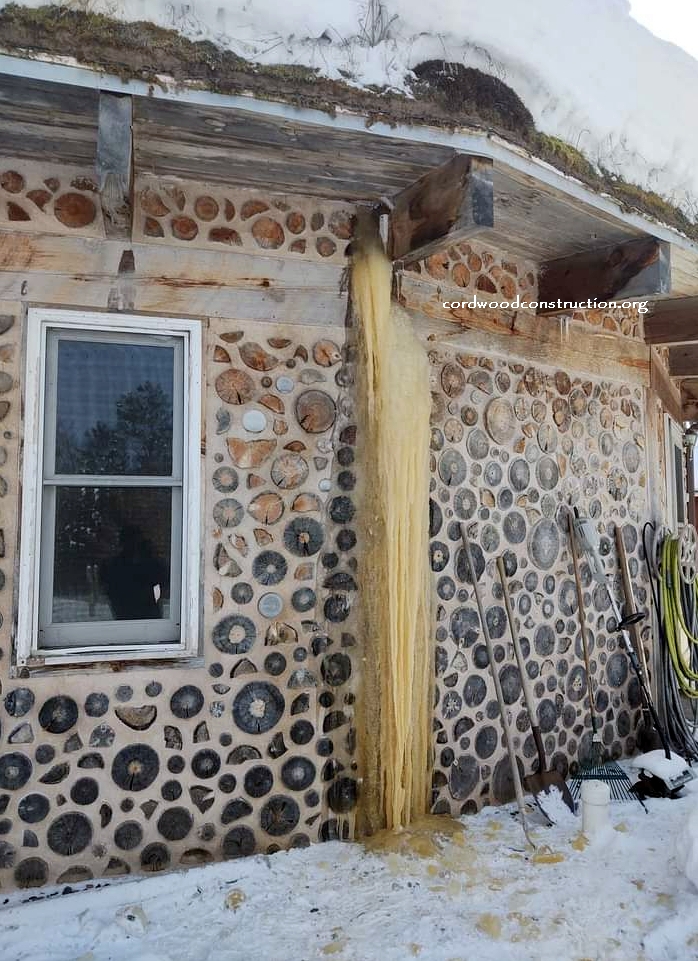
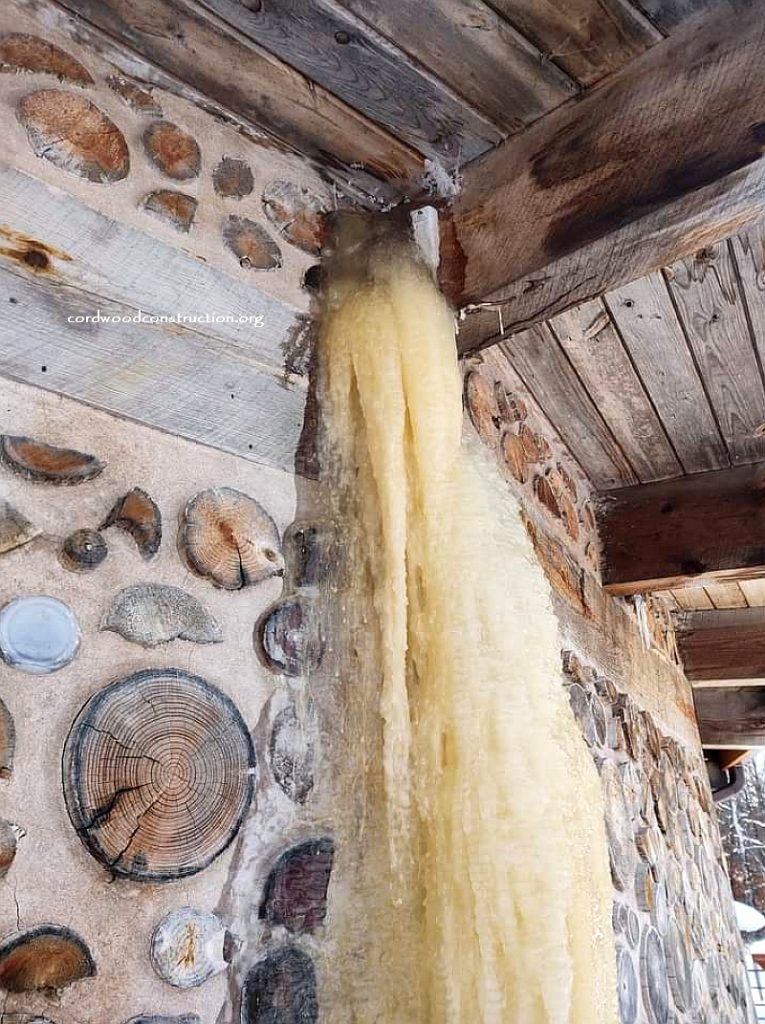
This is water that found its way through the living roof (Carpenter ant damage) and onto the outside wall where it froze into a huge column. This damaged the interior cordwood wall, the exterior wall and rotted some of the framework.
“I had a grass roof for thirty years. Replaced it about ten years ago with a metal roof. There were moisture issues, mostly condensation. In the fall and spring. It was on my root cellar attached to my greenhouse the moisture condensed on the ceiling as it stayed cool because of the mass of the dirt kept the ceiling cool collecting moisture from the greenhouse. Moisture now mostly collects on my stone chimney as it stays cooler than the rest of the greenhouse. Moisture attracts itself to the cold surface as in a glass with ice, collects moisture.” -Tom
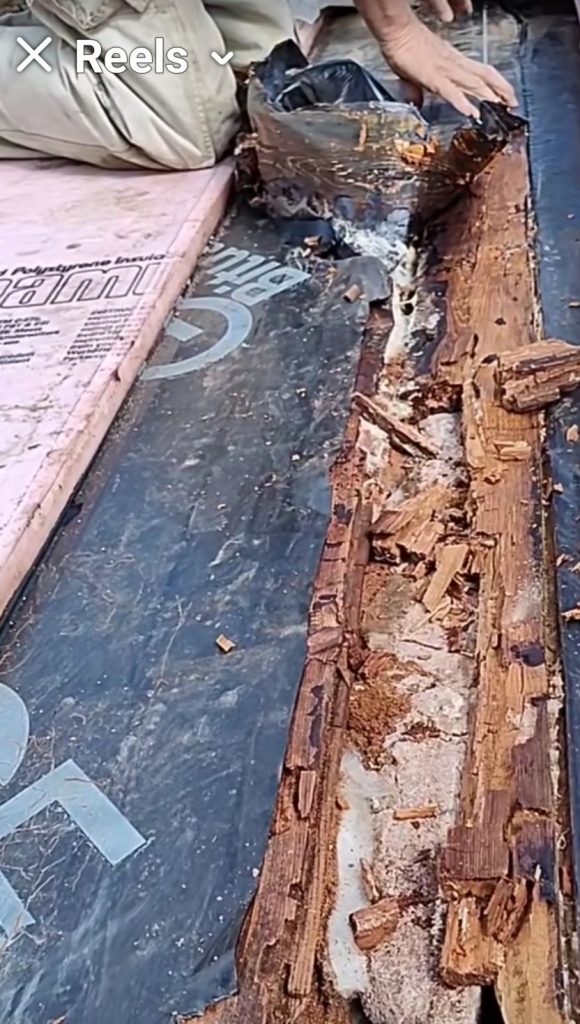
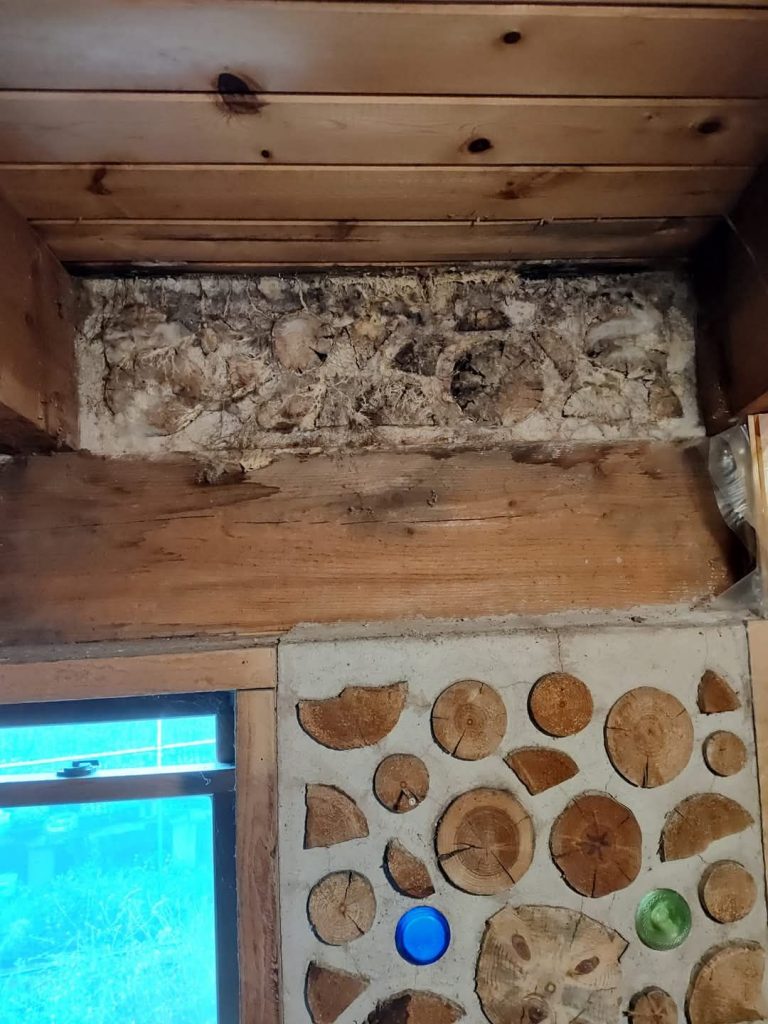
This living roof leaked, and carpenter ants were able to penetrate the wood and started building homes.
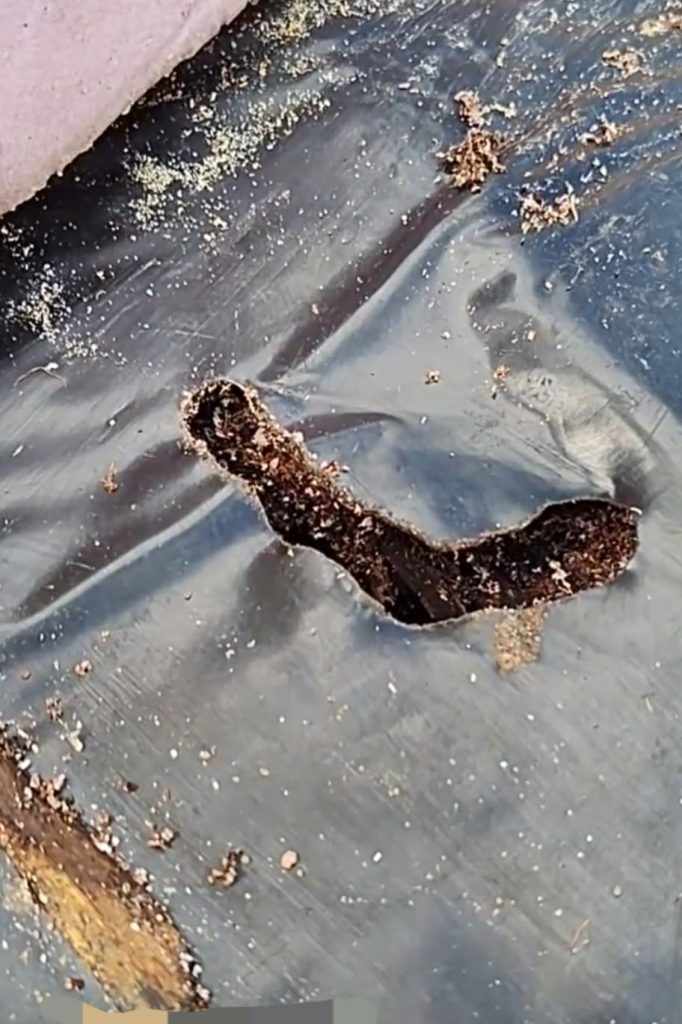
Carpenter ants don’t actually eat the wood, but use it for nesting and growing their colonies. Half of the roof had to be removed (that means digging everything up and replacing it). The task is hard, dirty, and disheartening. The picture below shows the compromised cordwood on the inside of the house.
Here are some leaking roof stories and the solutions.
Amy Heaton had roof leaks in her cordwood home. Here’s how she fixed it.
This is my journey from a grass living roof to architectural shingle. I did not build this house, but have maintained and upgraded it for 15 years. I struggled with mold and leaks for about 9 years and tried everything I could to fix it, including digging up the roof, re-laying bituthene, tar, and styrofoam and all the gravel and grass layers. The house originally had railroad ties around the roof edges that seemed to be keeping the water from draining off. There were no gutters either. In the end, I hired a contractor to build a very creative encasement around the Russian stove chimney and build an architectural roof. I have no more leaks or mold but the house looks less like a hobbit home! I’m glad I made this choice to prevent further deterioration!
https://www.facebook.com/groups/209973002460134/user/1268880987
Caitlin McNamara Sullivan
We have a cordwood home that was built with a “green roof” – never planted, just a ton of gravel on top of the membrane.Well, 30+ years later, there is a leak (of course!) and now we are looking at replacing the roof. Should we replace with a conventional roof (thinking PVA since its’ low slope) OR go full-on green roof? I think the green roof will be at least 3x the cost.

Cob and Cordwood (Cobwood)
We are going from Green Roof to Reclaimed Tin. The winds and heat here continually killed anything living. The fierce winds simply rolled all the dirt, straw, hay, plants up like a rug. Green roofs are lovely, but many are installed by amateurs and eventually leak. The leak is difficult to locate and often, like in this example, the entire roof had to be removed and replaced. This happened to Jack Henstridge’s beautiful “Ship with Wings” Cordwood home. Personally, I am partial to a metal roof for simplicity and longevity. This is not to say a green roof can’t be installed successfully.
I know a couple in the Midwest have leaks in their living roof. Another couple has carpenter ants that chewed the bituthene-liner and caused rot in the roof timbers and side walls.
IF you are planning to build a Living Roof make sure you build it like you are making a fine cabinet. Every seam and joint needs to be double-sealed. The layers of materials on top need to be smoothed and tamped, and attention has to be paid to what you plant and how you maintain it. The most successful roof we have used is the one that makes use of a thick waterproof layer and then “planting trays” with pots of sedum. The sedums are low-growing and make for easy replacement.
Should you wish to learn how to build a cordwood cottage, cabin, or home, please visit www.cordwoodconstruction.org While you are there, click on the pictures, read the brief articles, check out the latest workshops and newsletter and if you are interested, click on the Online Bookstore to see all the cordwood literature available in print and ebook format.

If you have questions that aren’t answered on the website, email me at richardflatau@gmail.com
Readers have requested a brief bio, so here goes:
Richard & Becky Flatau built their mortgage-free cordwood home in 1979 in Merrill, Wisconsin. Since then, they have written books, conducted workshops, facilitated 2005, 2011 & 2015 Cordwood Conferences, and provided consultation for cordwood builders. Cordwood Construction: Best Practices DVD (2018), Cordwood Construction Best Practices 2020 (print & ebook), and Cordwood Conference Papers 2015 are the newest publications available from their Online Cordwood Bookstore. www.cordwoodconstruction.org

The Cordwood Workshop DVD is like taking a workshop in your living room.
For more information on Cordwood Construction, click on the picture or visit www.cordwoodconstruction.org


