
PROS & CONS of Cordwood Construction.
A concise summary from the cordwood construction archives:
Cordwood construction is a natural building method that involves stacking short logs—similar to split firewood—in a mortar matrix to create walls. This technique, also known as cordwood masonry, offers a distinct rustic aesthetic where the “end grain” of the wood is exposed on both the interior and exterior.

Advantages of Cordwood Construction
The primary benefits of cordwood masonry are centered on its environmental sustainability and cost-effectiveness for DIY builders.
Cost Savings: It can be significantly cheaper than standard stick-frame housing, especially if you have access to free or low-cost wood from your own property.
Thermal Performance: The combination of wood (a decent insulator) and mortar (thermal mass) allows walls to store heat and release it slowly, a phenomenon known as the “thermal flywheel effect.” It is also important to use good insulation in the center cavity to produce a powerful R-value.
Fire & Storm Resistance: Because it is recognized as a form of masonry, many insurance companies consider it fire-resistant, as it is difficult to ignite solid logs embedded in mortar.
Sustainability: Cordwood sequesters carbon and can utilize small-diameter “waste wood” that is otherwise unsuitable for conventional construction.
Ease of Skill: The process is relatively simple to master for novices, making it a popular choice for community or group building projects.
Best Practices: Use the well-defined 12 Best Practices to build a home that is energy efficient, uses locally available materials, has a No Regret appeal.
Mortar Mixes: If you don’t want to use Portland Cement in your mix, you can choose one of many other options: Lime Putty, Cob, Papercrete, Adobe, Plaster, etc.

Disadvantages and Challenges
Despite its benefits, cordwood construction is a SLOW PROCESS that requires careful attention to material preparation.
Labor Intensive: Building a cordwood structure is extremely time-consuming and labor-intensive, often taking much longer than conventional methods.
Wood Shrinkage: As wood dries, it naturally shrinks, which can create tiny gaps between the logs and the mortar. This requires regular maintenance, such as “chinking” or sealing cracks, to maintain thermal efficiency.
Moisture & Rot Risk: Exposed end grains are more susceptible to moisture infiltration.
Proper design, including large roof overhangs and raising walls off the ground, is critical to prevent rot.
Permit Hurdles: Because it is an unconventional method, obtaining building permits can be more difficult in urban or strictly regulated areas where inspectors are unfamiliar with the technique.
Resale Value: Due to its unique appearance and niche appeal, a cordwood home may be harder to sell on the traditional real estate market.
To learn more about this unique building technique, go to the Cordwood Construction website to find out how to build with Best Practices and have No Regrets. www.cordwoodconstruction.org
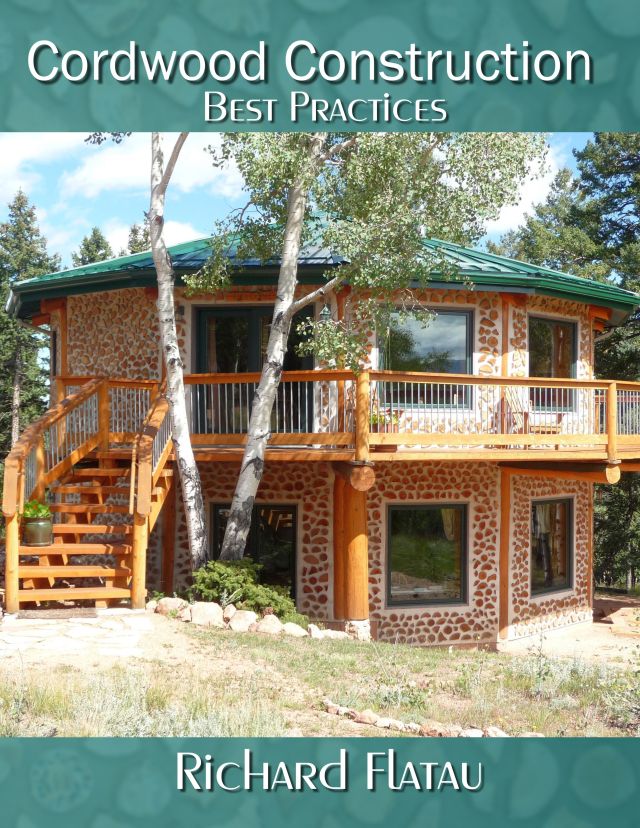
Additional research: Consider the latest book Cordwood Construction Best Practices and the most up-to-date video Cordwood Workshop DVD. Both are available at the Cordwood Online Bookstore in print and digital format. www.cordwoodconstruction.org/bookstore

Should you wish to learn how to build a cordwood cottage, cabin, or home, please visit www.cordwoodconstruction.org While your are there, click on the pictures, read the brief articles, check out the latest workshops and newsletter, and if you are interested, click on the book cover to see all the cordwood literature available in print and ebook format.
If you have questions that aren’t answered on the website you can email me at richardflatau@gmail.com
Readers have requested a brief bio, so here goes:
“Richard & Becky Flatau built their mortgage-free cordwood home in 1979 in Merrill, Wisconsin. Since then, they have written books, conducted workshops, facilitated the 2005, 2011 and 2015 Cordwood Conferences and provided consultation for cordwood builders. Cordwood Construction: Best Practices DVD, Cordwood Construction Best Practices (print) and Cordwood Conference Papers 2015 are the newest publications available from their online cordwood bookstore.” www.cordwoodconstruction.org


